Showing posts with label globalisation. Show all posts

Sunday, 9 September 2007

What shock doctrine?

.

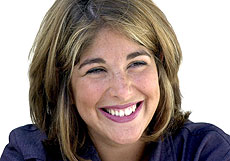
Far from being the Marx of the twenty-first century, Naomi Klein is a conspiracy theorist whose work depends on a partial reading of history and offers no constructive vision.

Leon Trotsky once said ‘war is the engine of history.’ He was half right. The violence, chaos and confusion of armed conflict does indeed frequently result in extremely rapid social change. Trotsky had seen the Russian monarchy swept away and a communist regime erected in its place because of the carnage of the Great War. Where he was wrong was to suggest that it was only war that could cause this kind of change, when any kind of upheaval, be it natural disaster, economic collapse or industrial conflict is capable of changing a nation beyond recognition. Look at any significant change in the course of history and it will invariably involve a crisis of some kind.

This is not something Naomi Klein seems to understand. She looks at the fact that the forward march of the market is linked with a series of ‘shocks’ and sees not a historical fact of life but a conspiracy. She believes that followers of Milton Friedman (who she considers fundamentalists) have ruthlessly exploited shocks like Hurricane Katrina, 9/11 and the 1973 Chilean coup to force their view on the world. Furthermore, she suggests that Friedmanite policies can only be fully implemented in an authoritarian state. Hardly any of this stacks up.

Crises do not necessarily bring about a reduction in the size of the state. Without the trauma of World War II we would probably never have had an NHS. Without the Great Depression we would never have had Keynesianism and New Deal liberalism. Miss Klein is herself part of a political movement that has its roots in the upheaval caused by the Vietnam War.

Should you use crisis to further your political ends? Klein appears to believe that you should not but confuses the point by unhelpfully eliding the actions of the Friedmanites with people profiteering from tragedies. One is clearly reprehensible, the other is more debatable. If we focus only on people using crises for what they perceive to be the interests of society rather than their own, then Klein has a problem. Is she seriously suggesting that the world would be a better place if Millicent Fawcett had decided in 1917 that because of the war in Europe now was not the time to get women the vote or if Keynes had decided that it was unfair to use the backdrop of the depression to propose his new economic theory? ‘Making the best of a bad situation’ is normally considered a virtue not a vice.

To characterise Friedman as a fundamentalist is a bit of stretch. He is willing to support a large number of measures to support the poor such as state funded schools and a negative income tax. Market fundamentalists do exist but they tend to be marginal figures like Murray Rothbard and Ayn Rand rather than the architects of Machiavellian conspiracies on a global scale.

Klein’s association of the market with violence and oppression does not stack up. By its very nature a market economy is less violent than its socialist alternative because it relies on voluntary co-operation rather than the coercive power of the state. The example that Klein relies on for this particular argument is the Pinochet regime in Chile, which is comparatively unusual. This is to my knowledge the only case where a regimes move from a command to a market economy has been accompanied by a significant increase in political violence. By contrast the construction of a command economy has hardly ever been achieved by a liberal democracy; it is almost invariably a product of dictatorship.

Probably the biggest problem with Klein’s work is that for all her evident passion and eloquence, she seems to have no interest of any kind in proposing a positive alternative to the market economy. An article in the Economist describes this flaw rather well:

“What is the superior alternative to capitalist development that Ms Klein proposes? She feels under no obligation to say. It is not her job to dictate to the movement. The most she can do, in all modesty, is to offer indications and observations; the people, thus empowered, must do the rest…Certainly, Ms Klein is for justice, “deep” decentralised democracy (not the false kind currently practised), autonomous spaces and diversity of every kind. All these things can presumably be reconciled with the ambitious goals she would doubtless wish to see pursued in welfare spending, environmental protection and income redistribution—aims which, on the face of it, call for a high degree of centralisation and some reduction in the amount of autonomous space—but readers and listeners are never told how this contradiction might be resolved.”

Klein's work gives a very distorted picture in which all the evil in the world is done at the bidding of Milton Friedman and the dubious record of her own side is never examined. It is ultimately a source of heat rather than light; making people angry but not suggesting what they should do about it. To use another Trotsky quote it is time to send the shock doctrine to the 'dustbin of history.'

Monday, 3 September 2007

The market and the masses

Winston Churchill once said: “Liberalism is not Socialism, and never will be. There is a great gulf fixed. It is not a gulf of method, it is a gulf of principle. ... Socialism seeks to pull down wealth, while Liberalism seeks to raise up poverty.” I was reminded of this quote while reading a comment piece in the Guardian by George Monbiot entitled ‘How the neo-liberals stitched up the wealth of nations for themselves.’ The premise of which is that a group of wicked rich people called ‘neo-liberals’ have tricked everyone into accepting economic policies that have hugely enriched a tiny super wealthy minority while leaving the rest of us behind.

The problem with this argument is that far from just benefiting the super rich, the gains from ‘neo-liberal’ reforms are widely dispersed and extend to even the poorest members of society. They do not benefit from the hyperinflation, high taxes and pricey imports that usually result from the kind of socialist and Keynesian policies that Monbiot admires. While ‘the neo-liberal’ trinity of sound finance, sound money and free trade are of real benefit to the most vulnerable members of a society.

In 1975, New York city was on the verge of bankruptcy. Years of profligate spending by successive mayors had pushed the city further and further into debt and it was now barely able to pay its bills. To avoid a financial catastrophe the city was forced to seek a bail out from the Federal government, the conditions of which was that the big apple had to balance its books. The only way to achieve this was through tax increases and painful cuts in public spending. The services that bore the brunt of these cuts were the police and fire department with predictable results for the safety of ordinary New Yorkers. Where did blame for this disaster lie? Monbiot implies that it lies with the ‘neo-liberals’ in the treasury department who added conditions to the federal assistance to the city. This is a rather strange idea. The city could not indefinitely spend more than it took in, in taxes. At some point the city was going to have to pay its debts, all the conditions did was bring that day forward. Ultimate responsibility for the crisis must lie with politicians in New York, who behaved more like a shopaholic with a credit card than responsible public officials. They pushed the city to the edge and the consequences of their actions should serve as a warning to anyone who believes that sound finance is something that only matters to bankers and accountants.

Inflation is one of the worst curses that can be inflicted on a nation. It pushes every citizen into a constant struggle to get by as the money in their pockets becomes worth less and less. The monetarist policies designed to tackle this great social ill are one of the most controversial but ultimately most beneficial parts of the ‘neo-liberal’ program. The vast majority of citizens suffer when levels of inflation are high because it becomes very difficult to save money and the constant changes in prices make it hard for consumers to compare the merits of different products. The pain is worse for the less well of because they find it harder middle class compatriots to protect the value of their savings from inflation, who can usually move their savings into a more stable foreign currency.

Free trade is often assumed to harm the poor. You would certainly get the impression it did if you listened to the populists who preach the benefits of protectionism but this is not necessarily the case. Free trade enables nations to specialise in the type of production that they have a comparative advantage in and helps to hold down prices by exposing domestic firms to competition from foreign firms. This should boost economic growth and leave the majority of people better off. The more credible critiques of free trade tend to argue that these gains do not spread to the poor because low skilled workers see their wages driven down because many of the industries that created a demand for their labour have been moved abroad. There are at least three problems with this critique. It sees things exclusively from the point of view of developed nations. The situation is rather different in developing world which have been gaining rather than losing low skilled jobs and in an number of cases has seen the gap between rich and poor reduced by international trade. It also sees things only from the point of view of poor workers when many of the poorest are those on living on benefits, who gain from lower prices (which mean that there money will go further) and higher growth (which usually leads to more tax revenues that can be used to pay for more benefits. It also ignores the possibility of redistribution of some of the wealth that is created by liberalising trade.

There is no law that states that because somebody is gaining, someone else must be losing. The huge fortunes gained by the wealthiest members of society are not a sign that the poor are losing out but that society as a whole is becoming wealthier. The claim that those who support the market care only for the rich is a nonsense. We simply think that the best way to help the less fortunate is to give them back the economic freedom that has been taken from them.

Sunday, 19 August 2007

The Apologist

Whatever else can be said about John Pilger (and there is plenty to say), he has definitely got guts. His attempt to whitewash Hugo Chavez’s record in Thursday's Guardian is bold, brazen and blatant. He casually downplays, excuse or outright ignores the abuses of Chavez’s regime, while overstating its success and doing everything in his power to make everything the fault of Americans.

In the week that Chavez has declared himself president for life (i.e: dictator), it is extraordinary that Pilger makes no mention of this. Nor for that matter does he mention Chavez replacing the independent judiciary with political cronies, riot police being set on peaceful protesters or the harassment suffered by voters who signed the petition calling for a recall referendum.

What he does manage to include are obligatory references to the Chilean coup of 1973 and the Iran-Contra scandal and darkly hint that there is some comparison between what is going on now and what happen then. The reality is rather different. The United States has not actively tried to overthrow. It is true that that the state department failed to condemn the attempted military coup against Chavez but this a far cry from sending the CIA in to topple the government as would once have happened.

Pilger attempts to excuse Chavez’s attempt to close RCTV on the grounds that ‘80% of TV stations are owned by private companies many of which are hostile to the regime is certainly creative but falls down on many grounds. If the Labour Government in Britain tried to close down the Independent, few would consider it a legitimate defence, if the government claimed: ‘well there are plenty of other opposition newspapers.’ What Pilger also ignores is the way that pressure has been put on the owners of other TV stations to avoid criticising the regime, for example, by passing a law requiring journalists to tell the ‘truth,’ a law which will be enforced by the Chavista judiciary. Pilger’s attempt to suggest that RCTV is being closed down because of its support for the coup rather than its criticism of Chavez, is dubious to say the least. If RCTV’s real crime had been to back the coup then why not punish them at the time rather than four years later?

Pilger is full of praise for Venzuela’s social program and rightly so: we can all support better healthcare and education. Where Pilger’s falls down is when he tries to use these programs to excuse the regimes human rights abuses and when he gives Chavez credit for these programs.

To justify the erosion of democracy and human rights because they have coincided with the construction of new schools, hospitals and universities is no different from claiming that Mussolini’s fascist regime was okay because it made the trains run on time. To follow this line of reasoning implies that democratic government and personal freedom are something that a government can dispose with if it finds them inconvenient rather than a non negotiable part of any just society.

It must also be borne in mind that the reason that these programs have come into existence is not because Chavez is a particularly benevolent ruler or because he has discovered a more just economic system but because rising oil prices have given him more money to play with than previous governments.

It is also worth bearing in mind that his record is a far from unblemished. Crime and corruption are up. Inflation is running at 20% and income inequality is rising.

A particularly cutting analysis of the logic of Pilger and his ilk is provided by Francis Wheen in his book ‘How Mumbo Jumbo conquered the world.’ He looks at Pilger’s attitude to East Timor. For twenty-five years Pilger lamented the West’s failure to intervene to protect the people of East Timor from their Indonesian oppressors. When an Australian led UN peacekeeping force was eventually dispatched to East Timor rather than rejoicing Pilger, condemned the intervention as a sign of Western imperialism. As Wheen puts it: ‘To Pilger … it is axiomatic that the west can never be right.’

Pilger’s conviction that the west is always wrong leads him to believe that only the West can do wrong and therefore that actions committed by opponents of the west are always right. This is a dangerous delusion that leads him to condone actions that run contrary to the values he claims to uphold. Shame on Pilger and shame on those believe his claim to be a fighter for the oppressed.

Friday, 3 August 2007

The Road from Serfdom

Cuba is a puzzle. How has Fidel Castro's regime survived, while other Communist governments have crumbled? Situated less than a hundred miles south of florida, it would appear to be uniquely vulnerable to American influence yet his hold on power is solid. By contrast communist rule has collapsed in the Soviet Union and has been shaken in China. The answer appears to be that Castro with the enthusiastic support of the US government has been able to keep Cuba in a state of economic isolation. This has insulated the Cuban people from outside influence which might encourage them to seek freedom.

In his best known work, the Road to Serfdom, the economist Frederich Hayek argued that the march of socialism posed a danger to the future of liberal democracy. Cuba demonstrates, how the opposite is also true: economic freedom is a danger to the rule of despots. If people win back the right to buy and sell as they wish then they are regaining control over an important part of their lives. If on the other hand the state retains control of the economy then that gives it enormous power over its people.

The most powerful tool available to a dictator is, as we've already seen, the ability to prevent your followers from trading with foreigners. This keeps outside influence to a minimum and limits reduces the flow of information from abroad that may challenge the regimes version of events. Trade with foreigners also helps to introduce technologies that can be exploited by opposition movements. For example, the Orange revolution in Ukraine was largely organised via mobile phones, which made it easier for the leaders of the protests to communicate and hence to co-ordinate their actions.

The free movement of people can also undermine one-party rule. The emergence of democracy in Taiwan can in part be attributed to the decision of the governing elite to send their children to American universities. This exposed them to life in a successful democracy, which encouraged them to demand the same for their own country.

It is not only by isolating people that dictators can use state intervention in the economy against their people. Nationalised industries provide them with an opportunity to dole out patronage to supporters and deny services to opponents.

This is a side to the argument about globalisation which we don't hear very much about and that has consequences. The anti-globalisation movement have been able to claim for themselves the mantle of the defenders of democracy, while opposing precisely the kind of changes that can do the most to promote political freedom.